Why a Website Matters for Real Estate — and How Behomes Builds It Smarter
In today’s digital environment, having a professional website for real estate isn’t just an additional sales channel. It’s a foundational tool that empowers agents, brokers, and developers to solidify their market positions.
Clients now often begin their property search online, comparing prices, reading reviews, and evaluating the reputation of an agency or developer. That’s why a strong online presence, backed by a functional site, can be the decisive factor in making
a sale. If you’re still wondering “should I make a website as a real estate agent?”,
the answer is clear: absolutely.
Let’s examine why every real estate agent needs a website, what essential pages your online resource should include, and how to generate leads, boost online real estate sales, and gain a sustainable competitive edge. In a highly competitive market,
an online platform becomes the primary tool for attracting your target audience
and showcasing available properties.
A professional, SEO-optimized website instantly increases your visibility, strengthens trust, and turns visitors into qualified leads.
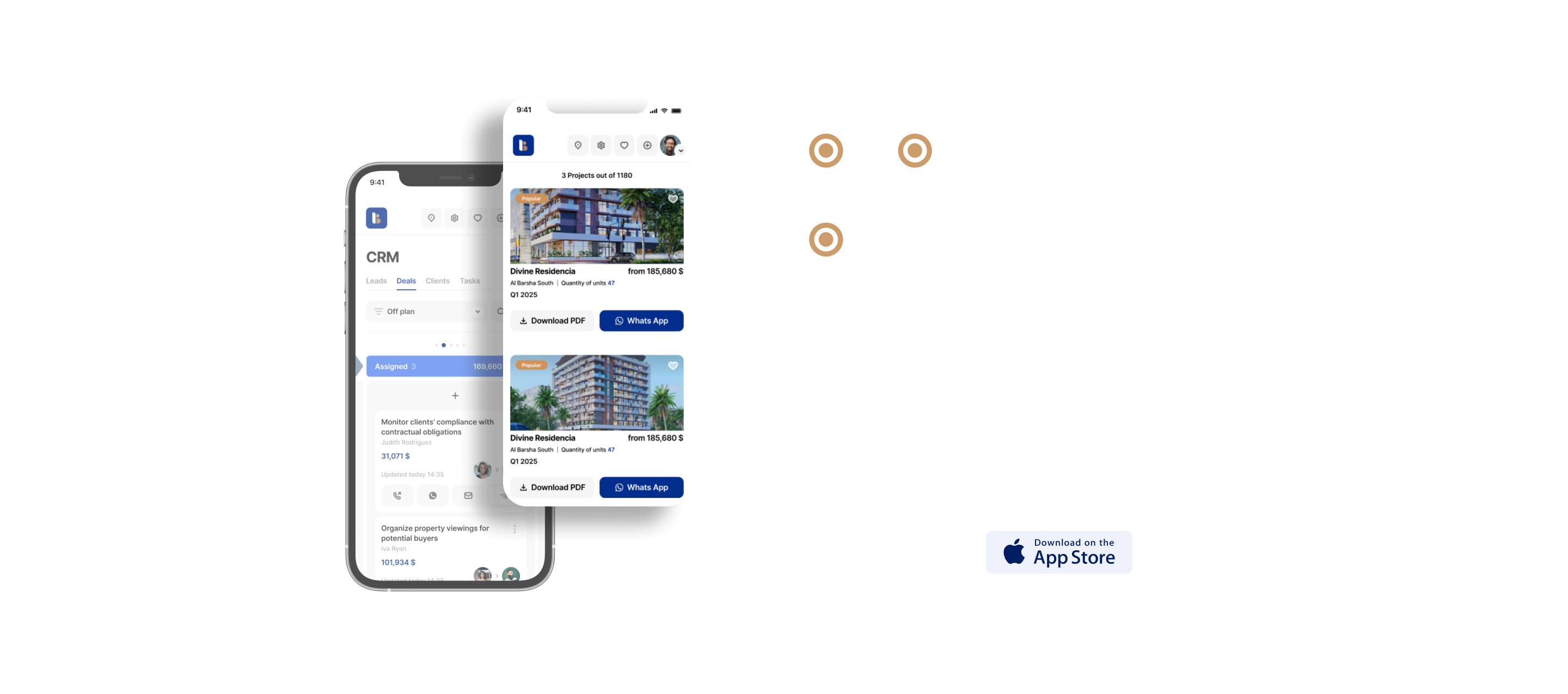
Behomes Web Development builds SEO-optimized, data-driven, CRM-integrated real estate platforms — powering 2,000+ projects with 650 developers.
Why Your Real Estate Business Needs a Website Today
A 2021 report by the National Association of Realtors, “Real Estate
in a Digital Age”, noted that over 97% of homebuyers used online
resources at some point in their search. Furthermore, around 51%
of them found a suitable property specifically through online platforms.
Having your own website for real estate agents is more than just a digital “business card”; it’s a 24/7 showcase of your professionalism,
accessible from anywhere in the world. It helps you present your property listings, connect with potential buyers, and build your reputation.
To be truly effective, your website should meet key requirements:
Comprehensive Content
Include a property database with detailed information.
Modern Design
An intuitive interface that’s visually appealing and easy to navigate.
Responsive Layout
Ensure it works well on desktops, tablets, and smartphones.
SEO Optimization
Attract organic traffic from search engines.
Your website is your 24/7 digital office — the first thing clients and partners check.
What pages should
a real estate website have?
If you want to create a truly effective online resource, think about convenience for the user and the goals
of your business. Your site is your voice in the real estate market — a tool for establishing trust
and attracting new leads.
Home Page
Give a concise, impactful presentation of your brand, emphasizing key benefits and your unique selling proposition.
Property Listings
The heart of all real estate websites for realtors is the listings section. Make sure
to include an easy-to-use filter system (by price, property type, location), high-quality photos, 3D tours, and thorough descriptions. Clear navigation significantly improves
the chances of converting a visitor into a client.
About the Agent or Company
Share your experience, achievements, and areas of specialization. Nothing builds trust like the testimonials of satisfied customers. Post real success stories and reviews from clients who have used your services — this helps potential buyers recognize that you’re
a reliable professional with a proven track record.
Contact Page & Feedback Form
Quick, accessible ways to get in touch are crucial for successful online real estate sales. Provide
a phone number, email, office address, and an easy-to-use contact form. The simpler
it is to ask questions or schedule a meeting, the higher your conversion rate.
Blog or News Section
Here, you can publish tips for buyers and sellers, neighborhood overviews, and market analysis. It helps build trust and boost traffic, as search engines favor sites that regularly post fresh content.
Additional Sections (Resource Center, FAQ)
Depending on your specific business needs, you can add a resource center, guides, checklists, or a frequently asked questions page (FAQ). This not only simplifies the user experience but also reduces the burden on your sales team.
A strong website architecture and relevant content are essential for real estate success — but to truly grow sales and trust, you need a data-driven web solution.
With our proprietary Behomes DataHub, your website is instantly connected to a verified real estate database — no manual uploads required.
Behomes offers a fully developed PropTech platform with a database of over 2,000 residential complexes across 6 key markets, including:
United Arab Emirates
Saudi Arabia
United States
Indonesia
Bahrain
Egypt
Each project, developer, and district automatically creates unique SEO pages — generating 1000+ indexed results within 2–3 weeks.
Built for Conversion — Not Just for Looks
Every Behomes site includes:
• Interactive map of projects and areas;
• Smart filters by price, developer, status, and district;
• Personal agent pages with contact forms;
• Integrated Behomes CRM for lead capture and tracking;
• Multilingual interface (English, Arabic, Russian, French);
• Responsive design for all devices.
Result: You get a lead-generating platform, not a static business card.
Discover new opportunities in real estate management!
Content, SEO, and Functionality: Building a Successful Site with Behomes
Regularly updating your site content is essential for achieving higher search engine rankings. When people ask “what is the best site for real estate?”, they’re looking for a resource with updated listings, helpful articles, and user-friendly functionality. Publish materials that highlight the key features of your market and offer practical advice — this expands your reach and attracts your target audience.
However, creating informative, engaging content is only half the battle. Interactive solutions such as online mortgage calculators, 3D property tours, and easy-to-use viewing request forms transform casual visitors into real clients.
Behomes Web Development builds marketplace-style websites with smart search filters that boost visibility and client value. Choose your ideal platform and launch with confidence:
Webflow Template
Perfect for boutique agencies and top brokers. Launch in up to 30 days with an animated design and instant setup
Behomes Template Framework
Best for mid-size agencies. Go live in 25 days, seamlessly connected to Behomes DataHub.
WordPress Premium
Built for developers and large agencies. Launch in 45 days with full ownership, multilingual support, and deep SEO tools.
Get your site in just 30 days!
Enjoy a fully integrated platform with a comprehensive database and tools to grow your business.
Lead Generation: How to Turn Visitors into Clients
A successful real estate site is a powerful lead engine. The best lead generation websites for realtors use proven tools to capture client contacts:
1. Subscription and Feedback Forms: Offer free guides, checklists, or mini neighborhood overviews in exchange for an email address. This helps you build a database of potential clients.
2. Online Chat and Chatbots: Quick answers to questions increase the likelihood of a visitor staying on your site and taking the next step.
3. Personalized Deals and Discounts: If you’re using a CRM system, you can segment leads and send targeted offers via email or messaging apps.
We use cookies to ensure that our website works properly, to personalize advertisements and other content, to enable social media features and to analyze online traffic. By continuing to use our website, you consent to the processing of cookies.